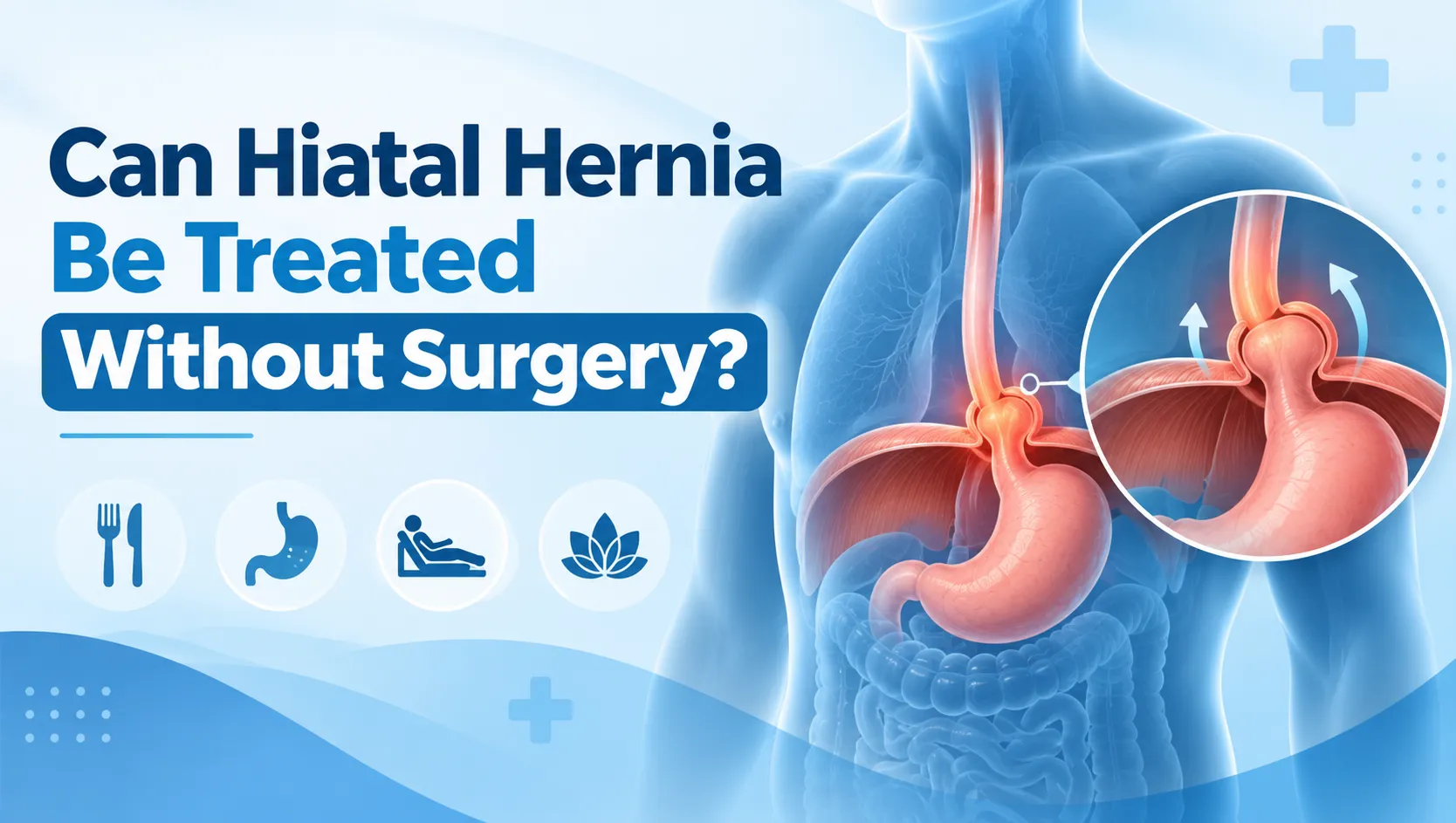
A hiatal hernia does not always require surgery. Many people with a small hiatal hernia can manage their symptoms with lifestyle changes, dietary modifications, and medicines prescribed by a doctor. Surgery is generally considered when symptoms remain severe despite treatment, complications develop, or the hernia is large.
A hiatal hernia occurs when part of the stomach moves upward through an opening in the diaphragm into the chest. Some people may not notice any symptoms, while others may experience heartburn, acid reflux, chest discomfort, bloating, or difficulty swallowing.
In this article, we explain whether a hiatal hernia can be treated without surgery, when non-surgical treatment may be enough, and when surgery may need to be considered.
What Is a Hiatal Hernia?
The diaphragm is a large muscle that separates the chest from the abdomen. The food pipe passes through a small opening in the diaphragm before joining the stomach.
A hiatal hernia develops when part of the stomach pushes upward through this opening.
There are two major types:
Sliding Hiatal Hernia
This is the more common type. The junction between the food pipe and stomach moves upward into the chest.
Paraesophageal Hiatal Hernia
In this type, part of the stomach moves through the diaphragm and sits beside the food pipe. This type may require closer medical evaluation because complications can sometimes occur.
Can a Hiatal Hernia Heal Without Surgery?
A hiatal hernia usually does not physically disappear or close on its own. However, many patients may not need surgery if their symptoms are mild or can be controlled with conservative treatment.
Non-surgical treatment mainly focuses on reducing:
-
Acid reflux
-
Heartburn
-
Chest discomfort
-
Regurgitation
-
Bloating
-
Pressure after meals
The appropriate treatment depends on the size and type of the hernia as well as the patient's symptoms.
How Can Hiatal Hernia Be Managed Without Surgery?
1. Eating Smaller Meals
Large meals can increase pressure inside the stomach and may worsen reflux.
Eating smaller portions more frequently may reduce:
-
Heartburn
-
Bloating
-
Regurgitation
-
Upper abdominal discomfort
Patients should also avoid lying down immediately after eating.
2. Avoiding Foods That Trigger Acid Reflux
Certain foods may worsen reflux symptoms in some people.
Common triggers may include:
-
Spicy foods
-
Fried foods
-
Fatty meals
-
Chocolate
-
Coffee
-
Carbonated beverages
-
Citrus foods
-
Tomato-based foods
-
Alcohol
Triggers can differ from person to person, so keeping track of symptoms after meals can be helpful.
3. Avoiding Meals Before Bedtime
Eating just before sleeping can make it easier for stomach contents to move upward into the food pipe.
It may help to avoid eating for approximately 2 to 3 hours before lying down or going to bed.
4. Elevating the Head While Sleeping
People who experience reflux at night may benefit from keeping the upper body slightly elevated while sleeping.
Simply adding several pillows may not always work well. Elevating the head end of the bed or using an appropriate wedge may be more effective for some patients.
5. Maintaining a Healthy Weight
Excess abdominal weight can increase pressure on the stomach.
Weight reduction, when medically appropriate, may help reduce:
-
Acid reflux
-
Pressure after meals
-
Heartburn
-
Regurgitation
Weight loss does not usually make the hernia itself disappear, but it may improve symptoms.
6. Avoiding Tight Clothing
Tight belts or clothing around the abdomen may increase pressure on the stomach and worsen reflux symptoms.
Loose and comfortable clothing may help reduce unnecessary abdominal pressure.
7. Stopping Smoking
Smoking may worsen acid reflux by affecting the muscle that helps prevent stomach contents from moving upward into the food pipe.
Stopping smoking may improve reflux-related symptoms and provide several other health benefits.
8. Medicines for Acid Reflux
Doctors may prescribe medicines to reduce stomach acid or control reflux symptoms.
Depending on the patient's condition, treatment may include medicines that:
-
Neutralize stomach acid
-
Reduce acid production
-
Help relieve heartburn
-
Protect the food pipe from acid irritation
Medicines control symptoms but do not repair the opening in the diaphragm or remove the hiatal hernia itself.
Can Medicines Cure Hiatal Hernia Permanently?
No. Medicines mainly reduce acid reflux and related symptoms.
They may provide good symptom control, but they do not physically move the stomach back permanently or repair the weakened diaphragm opening.
If symptoms remain controlled, surgery may not be necessary.
Can Exercise Fix a Hiatal Hernia?
Exercise cannot reliably close the hernia.
Regular physical activity may help with weight management and overall digestive health, but exercises that increase abdominal pressure may worsen symptoms in some patients.
Heavy lifting, straining, or intense abdominal exercises may need to be avoided if they trigger discomfort.
A doctor can advise which activities are appropriate based on the type and severity of the hernia.
Can Weight Loss Cure a Hiatal Hernia?
Weight loss can help reduce pressure on the abdomen and may significantly improve reflux symptoms in overweight patients.
However, weight loss generally does not repair the anatomical defect responsible for the hernia.
It should be considered a symptom-management strategy rather than a permanent cure.
Is Hiatal Hernia Dangerous?
Many small sliding hiatal hernias are not dangerous and may remain stable for years.
However, some patients can develop complications such as:
-
Persistent inflammation of the food pipe
-
Ulcers
-
Bleeding
-
Narrowing of the food pipe
-
Severe reflux
-
Difficulty swallowing
Large paraesophageal hernias may carry additional risks because part of the stomach can become trapped or twisted.
When Does a Hiatal Hernia Need Surgery?
Surgery may be considered when:
-
Severe reflux continues despite appropriate treatment
-
Medicines no longer control symptoms
-
The hernia is large
-
There is repeated vomiting
-
Swallowing becomes difficult
-
There is bleeding or anemia
-
The stomach becomes trapped
-
The stomach twists
-
Severe chest or upper abdominal pain develops
-
Complications of long-term reflux occur
The decision for surgery is made after evaluating symptoms, test results, overall health, and the type of hiatal hernia.
What Surgery Is Done for Hiatal Hernia?
Hiatal hernia surgery is generally performed to:
-
Move the stomach back into the abdomen
-
Reduce the size of the enlarged opening in the diaphragm
-
Improve the barrier that prevents acid reflux
Many procedures can be performed using minimally invasive techniques through small incisions.
The exact procedure depends on the patient's anatomy and symptoms.
What Tests May Be Needed Before Treatment?
Depending on symptoms, doctors may recommend tests such as:
Upper Gastrointestinal Endoscopy
This allows the doctor to examine the food pipe and stomach and look for inflammation, ulcers, or other abnormalities.
Barium Swallow
This imaging test helps show the position of the food pipe and stomach.
Esophageal Manometry
This measures the movement and pressure of the food pipe.
Acid Monitoring
This may be used to measure how much acid is moving from the stomach into the food pipe.
Not every patient requires every test.
Can You Live Normally With a Hiatal Hernia?
Yes. Many people with a small hiatal hernia live normally without needing surgery.
Symptoms can often be controlled through appropriate diet, lifestyle changes, weight management, and medication.
Regular medical review may be helpful if symptoms change or become more frequent.
Can Hiatal Hernia Get Bigger Over Time?
It can.
Some hiatal hernias remain stable, while others may gradually increase in size.
Factors that repeatedly increase abdominal pressure may contribute, including:
-
Chronic coughing
-
Constipation and straining
-
Obesity
-
Heavy lifting
-
Pregnancy
-
Age-related weakening of tissues
The size of the hernia does not always directly match the severity of symptoms.
What Happens If Hiatal Hernia Is Left Untreated?
If a person has a small hiatal hernia with no symptoms, treatment may not always be necessary.
However, untreated persistent acid reflux may irritate and damage the food pipe over time.
Possible complications can include:
-
Inflammation
-
Ulcers
-
Bleeding
-
Narrowing of the food pipe
-
Difficulty swallowing
Large paraesophageal hernias may have additional complications, including trapping or twisting of the stomach.
When Should You See a Doctor?
Seek medical evaluation if you have:
-
Frequent or worsening heartburn
-
Persistent chest discomfort
-
Difficulty swallowing
-
Pain after meals
-
Repeated vomiting
-
Unexplained weight loss
-
Black or bloody stools
-
Persistent anemia
-
Severe upper abdominal or chest pain
Sudden severe pain, repeated vomiting, or inability to swallow may require urgent assessment.
Conclusion
A hiatal hernia can often be managed without surgery, especially when it is small and symptoms can be controlled with lifestyle changes and medicines.
However, non-surgical treatment mainly controls symptoms and does not usually repair the hernia itself. Surgery may be considered when symptoms remain severe, the hernia is large, or complications develop.
Patients with persistent reflux, swallowing difficulty, repeated vomiting, or worsening pain should undergo proper medical evaluation to determine the most appropriate treatment.
Dr. Rajesh, best General Surgeon in Gurgaon, provides evaluation and surgical consultation for patients with hiatal hernia and other abdominal surgical conditions.
Frequently Asked Questions
1. Can a hiatal hernia go away on its own?
A hiatal hernia generally does not completely disappear on its own, although symptoms may improve with treatment.
2. Can a small hiatal hernia be treated without surgery?
Yes. Many small hiatal hernias can be managed with lifestyle changes and medication if symptoms are mild.
3. What is the best non-surgical treatment for hiatal hernia?
Treatment usually includes dietary changes, weight management, avoiding late meals, and medicines for acid reflux when prescribed.
4. Can hiatal hernia cause chest pain?
Yes. Some patients may experience chest discomfort, although chest pain can have many causes and should be medically assessed.
5. Can hiatal hernia cause difficulty swallowing?
Yes. Some patients may experience difficulty swallowing, especially when the hernia is large or reflux has caused inflammation.
6. Can exercise make hiatal hernia worse?
Some activities that significantly increase abdominal pressure may worsen symptoms. Exercise should be adjusted according to symptoms and medical advice.
7. Can weight loss improve hiatal hernia symptoms?
Yes. Weight loss may reduce abdominal pressure and improve acid reflux symptoms in overweight patients.
8. Is surgery the only permanent treatment for hiatal hernia?
Surgery is the treatment that can repair the anatomical defect, but many patients do not need surgery if symptoms remain controlled.
9. When is hiatal hernia an emergency?
Sudden severe chest or abdominal pain, repeated vomiting, or signs that the stomach may be trapped require urgent medical evaluation.
10. Which doctor treats a hiatal hernia?
A general surgeon or gastrointestinal surgeon can evaluate a hiatal hernia and determine whether surgical treatment is required.