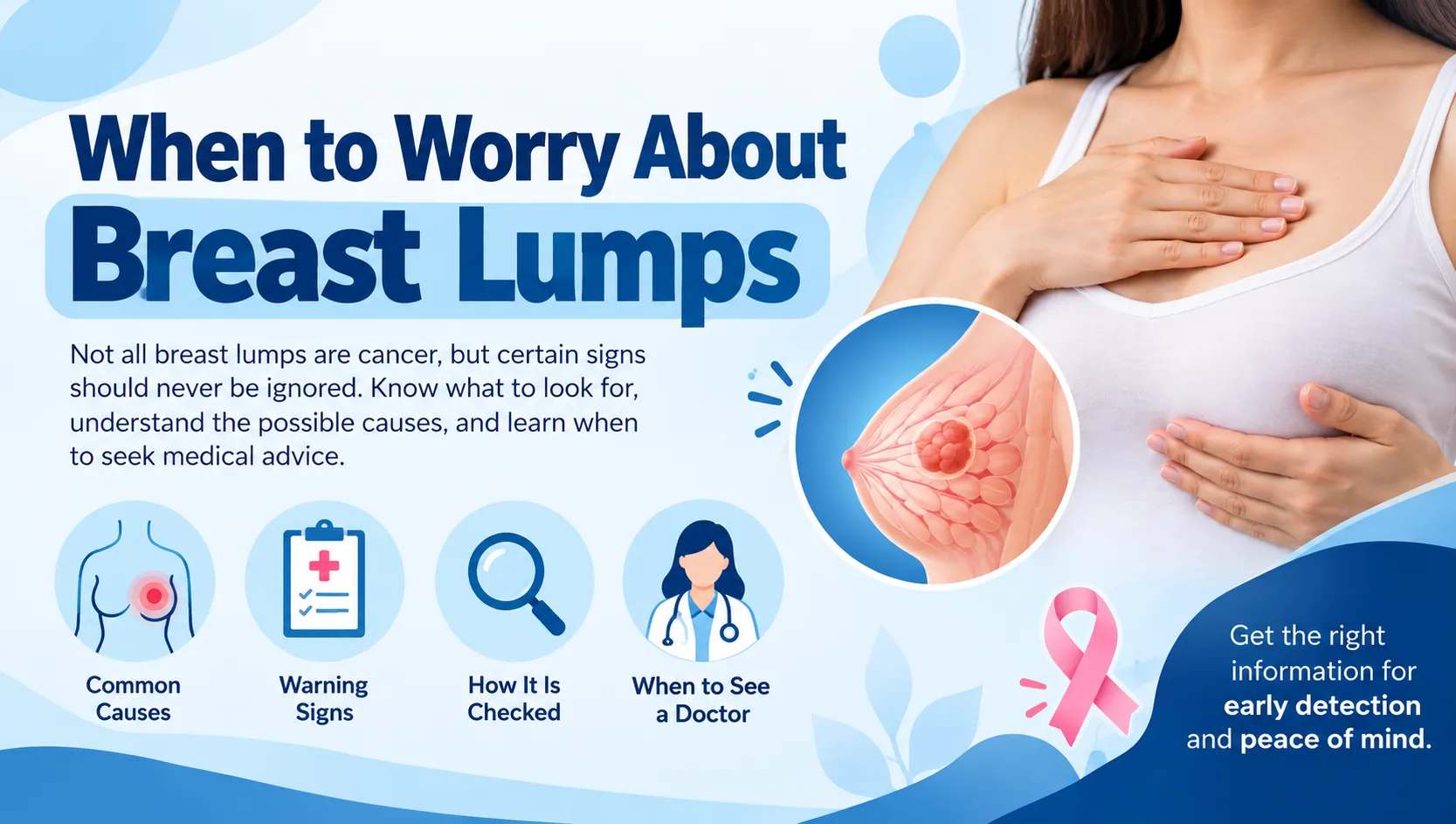
Most breast lumps are not cancer, as they often stem from harmless cysts, fibroadenomas, or hormonal changes. However, certain warning signs require prompt medical evaluation. Knowing what a breast lump feels like and recognizing unusual changes can help you seek timely medical advice.
If you notice a new lump on your breast, a lump that is growing, or any other unusual breast change, consult a qualified doctor for an appropriate evaluation.
When Should You Worry About a Breast Lump?
One of the most common questions people ask is, when should you worry about a breast lump? The answer depends on the lump's characteristics, whether it is new, and whether you have noticed other changes in your breast.
You should arrange a medical evaluation if you notice any of the following signs:
-
A new lump in the breast or underarm area.
-
A lump that is growing or feels different from before.
-
A change in the size, shape, or appearance of either breast.
-
Dimpling, puckering, or unusual thickening of the breast skin.
-
A nipple that has recently turned inward.
-
Unusual nipple discharge, particularly if it contains blood.
-
Persistent redness, swelling, or changes in the skin around the breast.
-
Persistent or unexplained changes in the breast, with or without pain.
These symptoms do not automatically mean you have breast cancer. However, they should not be ignored, as early evaluation can help identify the cause and determine whether treatment is needed.
If a breast lump appears suddenly and is accompanied by significant redness, warmth, swelling, or fever, seek prompt medical attention because an infection may be responsible.
What Does a Lump in Your Breast Feel Like?
People often wonder, what does a lump in your breast feel like? Breast lumps can feel different from one person to another. Some are soft and movable, while others may feel firm, hard, or fixed in place.
A breast lump may feel like:
-
A small, round or oval mass beneath the skin.
-
A smooth, movable lump that shifts slightly when touched.
-
A firm or rubbery area within the breast tissue.
-
A hard lump that feels attached to the surrounding tissue.
-
A tender or painful swelling, particularly around menstruation.
The texture and movement of a lump can sometimes provide clues about its cause, but they cannot confirm whether it is cancerous.
For example, a fibroadenoma, which is a common non-cancerous breast growth, may feel smooth, firm, and movable. A breast cyst may feel round and tender, although its characteristics can vary. A cancerous lump may feel hard or irregular, but breast cancers do not all feel the same.
Therefore, if you are asking what a breast lump feels like because you have noticed a new or unusual area, do not rely on touch alone to determine whether it is harmless.
What Does Breast Lump Feel Like When It Is Cancerous?
A common concern is whether a breast cancer lump has a specific texture or shape. In some cases, a breast cancer lump feels hard, irregular, or less movable than the surrounding tissue. It may also be painless.
However, not every breast cancer lump feels hard, and not every hard lump is cancerous. Some breast cancers may feel relatively soft, and some may not form a clearly noticeable lump at all.
A breast cancer lump may be accompanied by other changes, such as:
-
A new, persistent lump in the breast or underarm.
-
A change in the shape or size of the breast.
-
Skin dimpling or thickening.
-
Changes in the nipple, including new inward turning.
-
Unusual nipple discharge, particularly bloody discharge.
Pain is not a reliable way to distinguish a cancerous lump from a non-cancerous one. Breast cancer can occur without pain, particularly in its early stages, while harmless conditions may cause tenderness or discomfort.
If you notice a new lump or an unexplained breast change, consult a doctor rather than trying to diagnose the problem yourself.
Can a Lump on Breast Be Harmless?
Yes. Many breast lumps are non-cancerous and may not require treatment, depending on their cause and the results of the medical evaluation.
Some common causes of a lump on the breast include:
1. Breast cysts
Breast cysts are fluid-filled sacs that can develop within breast tissue. They may feel smooth or rounded and can sometimes cause tenderness, especially before menstruation.
2. Fibroadenomas
Fibroadenomas are non-cancerous breast growths that commonly feel firm, smooth, and movable. They are more common in younger women, although they can occur at different ages.
3. Hormonal changes
Hormonal fluctuations during the menstrual cycle can make breasts feel swollen, tender, or lumpy. These changes may improve after a period.
4. Infections and inflammation
Conditions such as mastitis can cause breast swelling, redness, warmth, and pain. Some infections may also lead to a collection of pus called an abscess.
5. Other benign breast changes
Normal breast tissue and other non-cancerous conditions can create areas that feel thicker or lumpier than the surrounding tissue.
Although these causes are common, a new lump should not automatically be assumed to be harmless. A medical assessment can help establish the likely cause and whether imaging or further testing is necessary.
Does a Breast Lump Hurt If It Is Cancer?
Not necessarily. A breast cancer lump can be painless, which is why the absence of pain should never be used as reassurance that a lump is harmless.
At the same time, non-cancerous breast conditions, including cysts and hormonal changes, can cause pain or tenderness. Some breast infections can also cause significant discomfort.
This means that neither pain nor the absence of pain can reliably determine whether a breast lump is serious.
If you notice a new lump, persistent discomfort, or another unusual breast change, arrange a medical evaluation. Do not wait for pain to develop before seeking advice.
How Is a Breast Lump Checked?
If you visit a doctor about a breast lump, the evaluation will usually begin with a discussion of your symptoms and medical history, followed by a clinical examination.
Your doctor may ask when you first noticed the lump, whether it has changed in size, and whether you have experienced pain, nipple discharge, or other breast changes. The doctor may also examine the breast and the surrounding underarm area.
Depending on your age, symptoms, examination findings, and medical history, further tests may be recommended.
Breast ultrasound: An ultrasound uses sound waves to examine breast tissue. It can help determine whether a lump is fluid-filled, solid, or has other features that require further assessment.
Mammogram: A mammogram is an X-ray examination of the breast that can help identify suspicious changes. Whether it is appropriate depends on factors such as age and the clinical findings.
Breast biopsy: If imaging or examination reveals a suspicious area, a biopsy may be recommended. This involves collecting a small tissue sample for laboratory examination. A biopsy is not necessary for every breast lump, but it may be needed to determine whether cancer cells are present.
The appropriate combination of tests depends on the individual case. Your doctor will explain the findings and recommend the next steps.
When Should You See a Breast Specialist?
You should consult a breast specialist or breast surgeon if you discover a new breast lump, notice a change in an existing lump, or experience unexplained changes in your breast or nipple.
It is particularly important to seek medical advice if a lump continues to grow, feels different from the surrounding tissue, or occurs alongside skin dimpling, nipple changes, or unusual discharge.
Younger women can also develop breast lumps and, although breast cancer is less common in younger age groups, a new or persistent lump should still be evaluated.
Avoid repeatedly pressing or squeezing the lump to check whether it has changed. Instead, note when you first noticed it and any other symptoms you have experienced. This information can help your doctor assess the problem.
Conclusion
Not every breast lump is cancerous, but any new or unexplained breast change deserves medical attention. The feel, size, or pain level of a lump cannot confirm whether it is cancerous.
If you notice a new lump, a growing lump, or changes in your breast skin or nipple, consult a medical professional promptly. Dr. Rajesh, a General Surgeon in Gurgaon with over 13 years of experience, can evaluate your concerns and guide you on the appropriate next steps for further assessment and treatment.
Frequently Asked Questions
1. What does a lump in your breast feel like?
A breast lump may feel soft, firm, rubbery, or hard. Some lumps move beneath the skin, while others feel less movable. These characteristics can vary depending on the cause, so a medical evaluation is necessary to determine what the lump may represent.
2. When should you worry about a breast lump?
You should arrange a medical assessment if you notice a new lump, a lump that is growing, or changes in breast size, shape, skin, or nipple appearance. A lump that is painless should also be evaluated.
3. Are hard breast lumps always cancerous?
No. Some non-cancerous conditions, including fibroadenomas, can cause firm or hard-feeling lumps. However, some breast cancers may also feel hard. A clinical examination and appropriate investigations are needed to assess the cause.
4. Can a breast lump go away on its own?
Some breast changes related to hormonal fluctuations may improve after menstruation. Other lumps may persist and require assessment or monitoring. Do not assume a new lump is harmless simply because it changes in size or becomes less noticeable.
5. Should I worry about a breast lump that does not hurt?
A painless breast lump should not be ignored. Some breast cancers do not cause pain, particularly in their early stages. Arrange a medical evaluation if you notice a new or unexplained lump.
6. Can women in their teens or twenties develop breast cancer?
Yes, although breast cancer is less common in younger women. Breast lumps in this age group are often caused by non-cancerous conditions, but any new or persistent lump should be assessed by a healthcare professional.
7. Which doctor should I consult for a breast lump?
A breast specialist or breast surgeon can assess a breast lump, recommend appropriate imaging or other tests, and explain the next steps based on the findings. Your primary care doctor can also help arrange an initial evaluation.