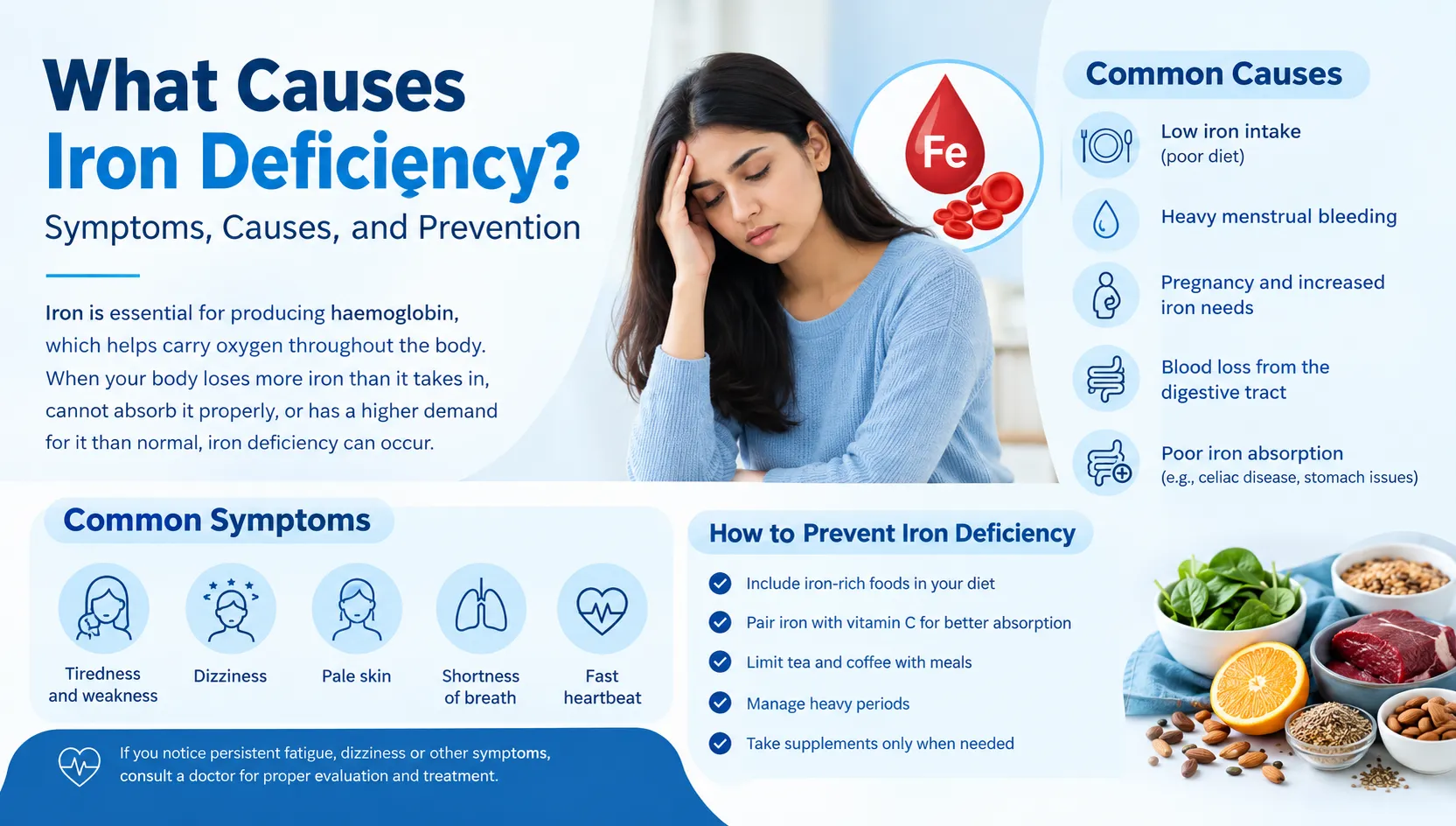
Low iron happens when your body loses more iron than it takes in, cannot absorb it properly, or has a higher demand for it than normal. It can cause tiredness, weakness, dizziness, pale skin, and shortness of breath.
Common causes include low iron intake, heavy menstrual bleeding, pregnancy, digestive-tract blood loss, and poor iron absorption. Identifying the cause is important for choosing the right treatment.
What Is Iron Deficiency?
Iron is a mineral needed by the body to produce hemoglobin, which is a protein found in red blood cells used by the body to carry oxygen through the body. Low amounts of iron make it difficult for the body to produce enough red blood cells.
The body will first use up its iron stores. However, once these iron stores are exhausted, there will be iron deficiency. Iron deficiency becomes severe when there is a drop in the amount of haemoglobin, causing iron deficiency anemia.
Iron deficiency and iron deficiency anemia have commonalities but are not the same. The patient has already suffered from iron deficiency before iron deficiency anemia, since the body will exhaust all its iron stores first.
What Are the Common Symptoms of Iron Deficiency?
Some people do not notice any symptoms in the early stages. As iron levels fall, the following signs may appear:
-
Constant tiredness: Feeling exhausted even after resting.
-
Weakness: Finding everyday activities more tiring than usual.
-
Pale skin: The skin, gums, or inside of the lower eyelids may look paler.
-
Shortness of breath: Feeling breathless while walking, climbing stairs, or doing routine work.
-
Headaches and dizziness: These may occur, especially when anaemia develops.
-
Fast heartbeat: The heart may beat faster as it tries to deliver enough oxygen around the body.
-
Brittle nails: Nails may become weak or break easily.
-
Hair loss: Some people notice more hair shedding than usual.
-
Unusual cravings: A person may feel an urge to eat non-food items such as soil, chalk, or ice. This is known as pica.
These symptoms can also occur with other health problems. A blood test is needed to confirm whether iron deficiency is responsible.
What Causes Iron Deficiency?
Iron deficiency does not always mean that a person is eating poorly. Several things can cause iron levels to fall.
1. Not Getting Enough Iron From Food
Iron comes from food sources such as meat, fish, eggs, pulses, green leafy vegetables, lentils, and iron-rich cereals. An inadequate intake of iron from food sources leads to reduced levels of iron being stored in the body over a period of time.
People on vegetarian or vegan diets will have no problem meeting their iron requirements but need to be more careful with their iron intake.
2. Heavy Menstrual Bleeding
Women who bleed heavily during their menstrual period will suffer from the loss of blood every month. This may end up causing iron deficiency in the body. If the woman’s menstrual periods are longer than usual and she has to change her sanitary napkins often, then going to see a doctor is advised.
3. Blood Loss From the Digestive Tract
One of the reasons for iron deficiency anemia is bleeding from either the stomach or intestines, but there will not always be bleeding in the stools. The reason could be peptic ulcers, inflammatory conditions in the intestines, or some other intestinal conditions. Blood loss from polyps or even colon cancer may cause this condition.
In cases where there is iron deficiency in men or post-menopausal women, it should be looked into thoroughly because there could be occult blood loss.
4. Pregnancy and Increased Iron Needs
The need for iron goes up during pregnancy due to the development of the baby and the increase in blood volume. In instances where the quantity of iron taken in is insufficient, iron deficiency results. This can also happen in people who have just delivered owing to loss of blood during delivery.
5. Poor Iron Absorption
Although there is a sufficient amount of iron available in the body, the absorption of the mineral may not be sufficient in some cases owing to conditions like coeliac disease, any kind of disease in the stomach and intestine, and certain operations done on the digestive system. Some medicines may also play a role.
6. Frequent Blood Donation
Donating blood is the process whereby blood is taken out of the body. Individuals who often donate blood may suffer from iron deficiency due to a lack of iron replenishment through food.
How Is Iron Deficiency Diagnosed?
Blood tests might be recommended by the physician depending on the assessment of symptoms and medical history.
-
Complete blood count (CBC): Evaluates the haemoglobin concentration, as well as other information about the red blood cells.
-
Serum ferritin: Measures the amount of iron present in the body. A low value indicates iron deficiency in the body. This test might be affected by inflammation.
-
Iron studies: Help measure the amount of iron in the bloodstream and its transport.
If iron deficiency is detected during the tests, additional tests should be done to understand the reason. The choice of tests depends on the individual patient's age, symptoms, menstruation history, nutrition, and other risk factors.
How Can Iron Deficiency Be Prevented?
Eating a varied diet is a good starting point. However, people who are already iron deficient may need more than dietary changes alone.
Include Iron-Rich Foods
Make sure you get enough of foods such as lentils, beans, chickpeas, dark green leafy vegetables, seeds, and iron-fortified cereals. Meat and fish contain iron for those who consume them.
Combine Iron With Vitamin C
Vitamin C helps the body absorb iron from plant foods. Eating oranges, guava, tomatoes, lemons, or other vitamin C-rich foods alongside iron-rich meals can improve absorption.
Be Careful With Tea and Coffee
The consumption of tea and coffee along with food will lead to reduced absorption of iron from plants. Having a gap between the two will increase iron absorption in your body.
Pay Attention to Heavy Periods
Bleeding heavily and repeatedly during one’s menstrual periods can slowly deplete iron supplies. Having the reason for the condition investigated and the bleeding controlled can prevent it from recurring.
Take Supplements Only When Needed
Iron pills may help replenish the iron content in case there is an iron deficiency in your body; however, iron pills are not suitable for everybody since taking too much iron may harm you. Iron pills may result in constipation, nausea, and stomach problems.
When Should You See a Doctor?
Consult a doctor if tiredness continues, you feel unusually breathless, or you have repeated dizziness or paleness. Medical attention is especially important if you notice blood in your stool, black tar-like stools, unusually heavy periods, or unexplained weight loss.
Seek urgent care if you have severe breathlessness, chest pain, fainting, or heavy ongoing bleeding.
Conclusion
Iron deficiency can develop due to low iron intake, heavy menstrual bleeding, pregnancy, ongoing blood loss, or poor iron absorption. Symptoms such as persistent tiredness, weakness, dizziness, pale skin, and shortness of breath may develop gradually and should not always be dismissed as everyday fatigue.
Blood tests can confirm iron deficiency, but identifying why iron levels are low is equally important for choosing the right treatment. A balanced iron-rich diet can help, while some people may also need supplements or treatment for the underlying cause.
If iron deficiency is linked to repeated rectal bleeding, piles, or another gastrointestinal or surgical condition, Dr. Rajesh, General Surgeon in Gurgaon, can provide evaluation and appropriate surgical consultation.
Frequently Asked Questions
Can iron deficiency occur without anemia?
Yes. There is iron deficiency even if there is no hemoglobin deficiency. The individual may have low ferritin despite normal hemoglobin levels.
How much time will it take to correct iron deficiency?
It will depend on how depleted the iron level is and its cause. It will take some time, depending on whether iron will normalize or it will be continued even after normalizing the hemoglobin levels.
What kind of food will help in raising iron levels?
Iron-rich foods include lentils, beans, chickpeas, green leafy vegetables, seeds, iron-fortified cereals, meats, and fish. Consumption of plant foods rich in iron along with vitamin C increases iron absorption.
Does iron deficiency cause hair loss?
It could cause hair loss in some people due to iron deficiency in the body. Many reasons cause hair loss, and therefore, it is recommended that one should carry out tests before using iron supplements.
Does iron deficiency arise from food?
It may not arise from food. Heavy menstrual bleeding, gastrointestinal bleeding, pregnancy, and lack of proper absorption of iron could be among other reasons for iron deficiency. It is very important to establish the reason behind iron deficiency.